
Capability
4-Axis CNC Milling
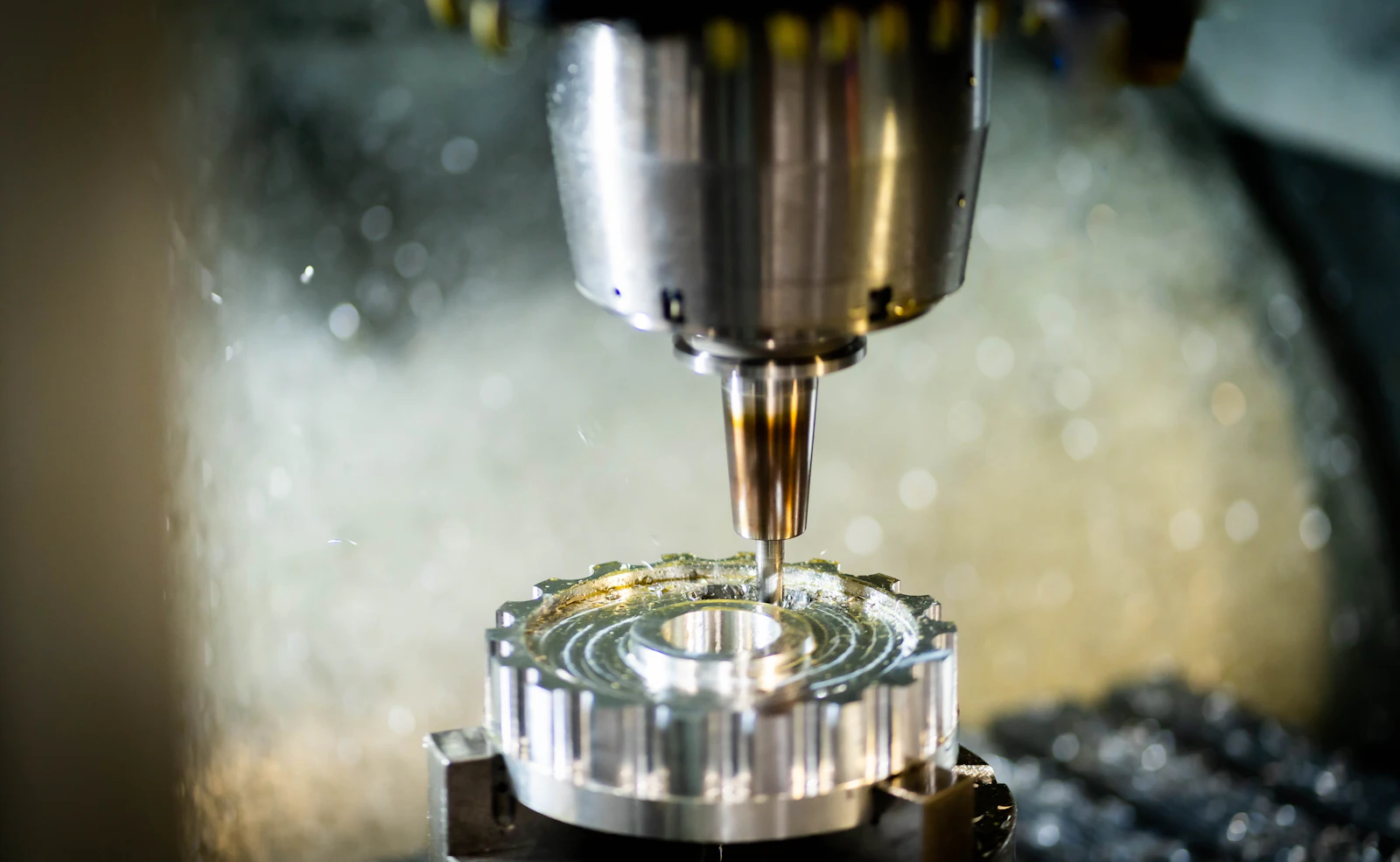
Vertical CNC machining with a rotary 4th axis — so multi-sided parts get machined in fewer setups, with features that stay accurate to each other.
CNC milling in Manatee County
Multi-sided parts in fewer setups
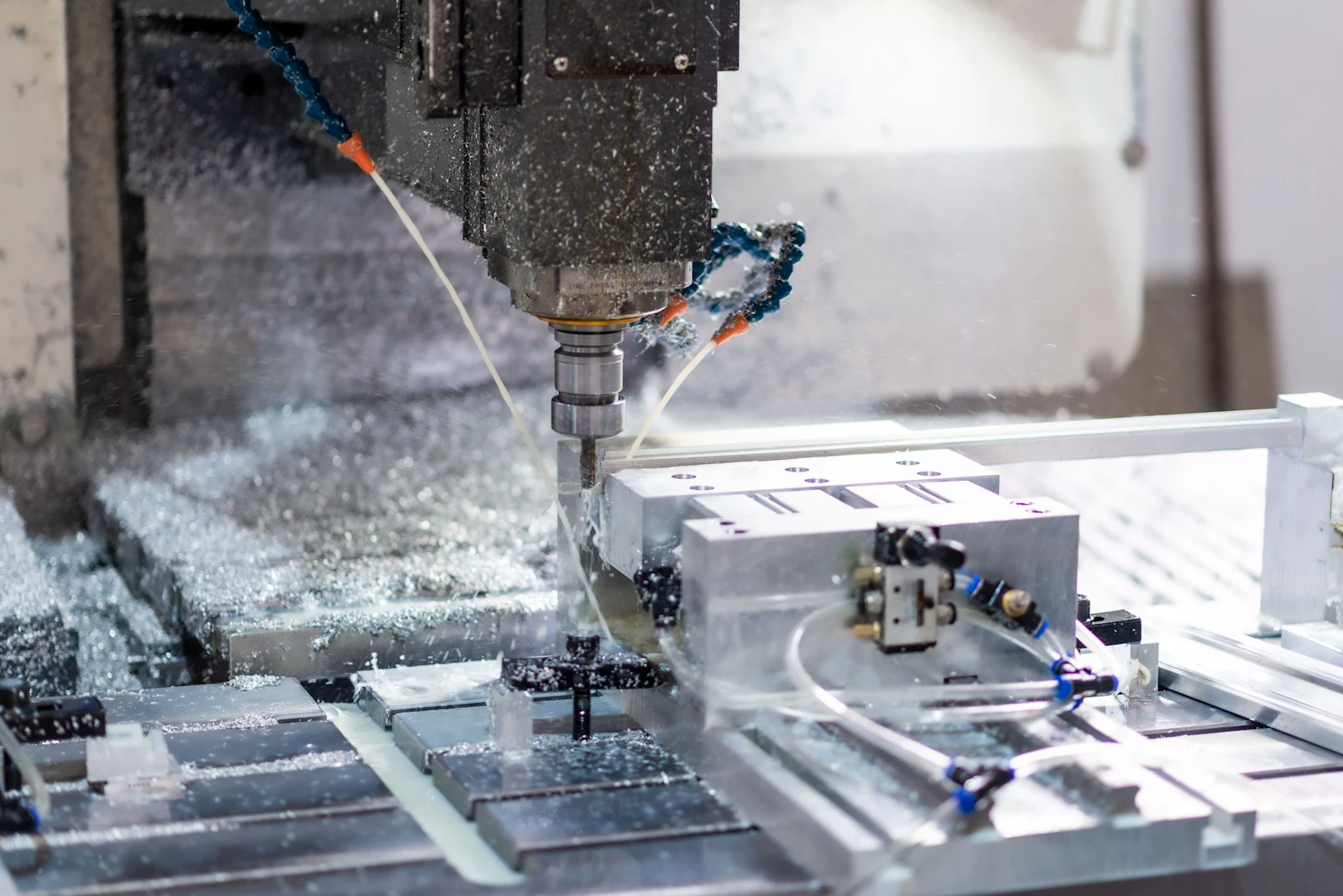
On a traditional 3-axis mill, every new face of a part means stopping the machine, re-clamping and re-indicating — and every re-clamp is a chance for features to drift out of position relative to each other. A 4th rotary axis lets us rotate the part to the next side under program control, so more of the part gets finished in a single, continuous setup.
That means faster turnaround on complex parts, more consistent results across a batch, and features that line up the way your print says they should.
Every milling job starts with programming in-house on our CAD/CAM system, so the same person who reviewed your design is the one writing the toolpaths.
What 4-axis gets you
Milling features we’re set up for
Indexed multi-face work
Machine the top, sides and angled faces of a part in one setup by indexing the rotary axis between operations.
Radial & cross holes
Hole patterns around the circumference of a round part, or holes that must be square to each other on different faces.
Wrapped & rotary features
Slots, grooves, engraving and profiles that wrap around a cylinder, using simultaneous 4th-axis motion.
Pockets, profiles & 3D surfaces
Standard 3-axis work too: pockets, contours, bosses, chamfers, threads and contoured surfaces.
Drilling, tapping & thread milling
Tapped holes, reamed bores and thread-milled features to your spec.
Fixture & tooling plates
Fixture plates, soft jaws and workholding for your own production — or ours.
Typical milled parts
What we machine
- Brackets, mounts and adapter plates
- Enclosures, housings and manifolds
- Fixtures, jigs and soft jaws
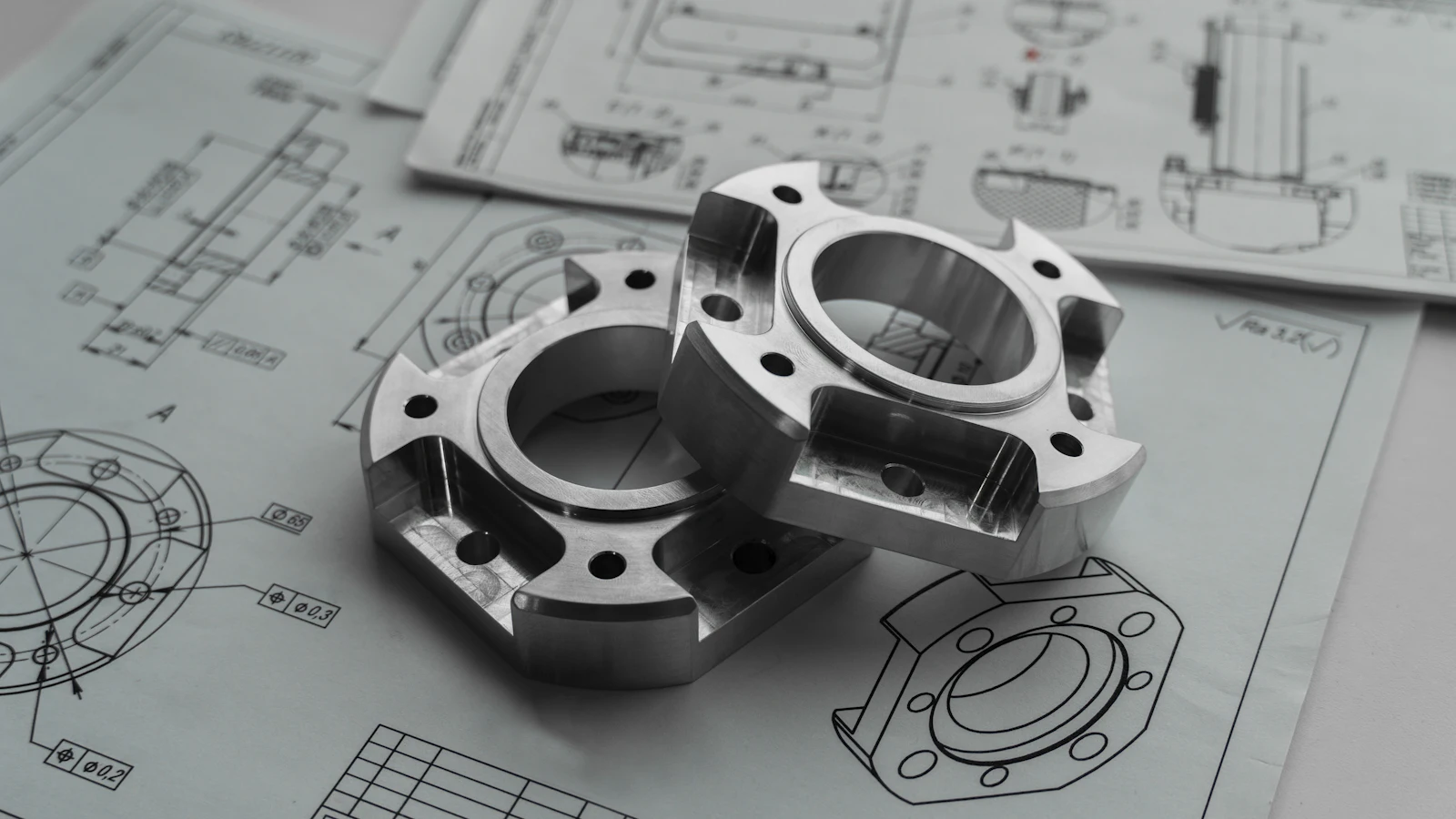
- Flanges and parts with bolt-circle patterns
- Cylindrical parts with cross holes, flats and slots
- Replacement and reverse-engineered machine parts
- Prototype parts for fit and function testing
Common materials
Aluminum (6061, 7075), mild and alloy steels, stainless steel, brass, bronze and engineering plastics such as Delrin (acetal), UHMW and nylon. Have something else in mind? Ask.
Also turning parts? Many round parts need both lathe and mill work. See our CNC turning with live tooling — and if you need parts fast, our prototype & low-volume machining service is built for quick, small-quantity jobs.
Frequently asked questions
What is 4-axis CNC milling?
A 4-axis CNC mill adds a rotary axis (the A-axis) to the standard X, Y and Z movements. The part is held in a rotary table or trunnion that can index to any angle or rotate while cutting, so several sides of a part can be machined in one setup.
Why does 4-axis milling matter for my part?
Fewer setups means less handling, less re-fixturing and better accuracy between features on different faces. It also makes features like cross holes, radial hole patterns, wrapped slots and cam profiles practical to machine.
Can you mill a single part, or do I need a minimum order?
Single parts are fine. We quote one-off prototypes and replacement parts as well as low-volume production quantities.
What file types should I send for a milling quote?
A STEP file is ideal, along with a PDF drawing showing tolerances, material, finish and quantity. If you only have a sketch or a physical sample, send it anyway — we also offer CAD modeling.